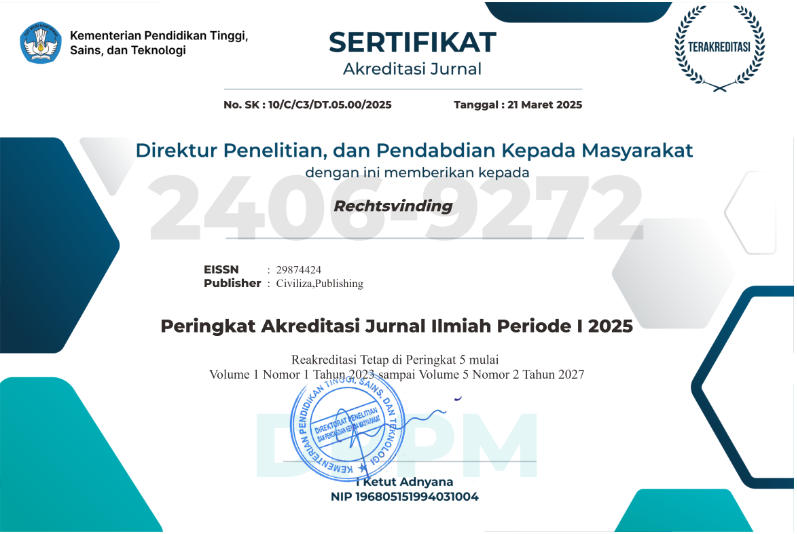
Bribery and Justice in Exodus 23:1–9: Implications for Anti-Corruption Frameworks in Indonesia
DOI:
https://doi.org/10.59525/rechtsvinding.1930Keywords:
Bribery; Justice; Exodus 23; Biblical ethics; Old Testament law.Abstract
This article examines the prohibition of bribery and the mandate for impartial justice in Exodus 23:1–9, exploring its theological-ethical foundations and implications for anti-corruption frameworks in Indonesia. Employing literary-rhetorical analysis and contextual hermeneutics, the study investigates the pericope's chiastic structure, legal setting, and Hebrew terminology—particularly šōḥad (bribe) and ṣedeq (justice). The findings demonstrate that the text reframes bribery not as a procedural violation but as a theological offense that distorts judicial perception, subverts righteousness, and fractures communal integrity. Uniquely, the injunction is anchored in Israel's collective memory of Egyptian oppression (v. 9), grounding justice in empathetic solidarity—a dimension largely absent from modern anti-corruption discourse. The article contends that Exodus 23:1–9 offers a robust ethical paradigm for reinvigorating anti-corruption efforts in Indonesia, providing moral resources for reinforcing judicial integrity, protecting the vulnerable, and fostering ethical formation among public officials. By bridging biblical ethics with contemporary governance challenges, this study demonstrates that the ancient text's vision of justice—rooted in impartiality, compassion, and collective memory—constitutes a transformative framework for addressing systemic corruption in Indonesia's judicial institutions.
References
Antwi, M. O., Boateng, P. A., Attah-Mensah, B., Owusu, J., Armah, I., & Polley-Kwofie, K. (2026). Biblical Ethics and Corporate Governance: A Conceptual Framework for Addressing Organizational Corruption. International Journal of Research and Innovation in Social Science, 10(1), 4631–4641. https://doi.org/10.47772/ijriss.2026.10100357
Awojobi, P. O. (2024). A study of bribery and corruption in Exodus 23: 8 and the Nigerian experience. Integrity Journal of Arts and Humanities, 5(2), 114–120. https://doi.org/10.31248/ijah2024.144
Bramasta, B., Yazwardi, Y., & Holijah, H. (2025). Rejuvenation of Constitutional Ethics in the Sapta Karsa Hutama of the Constitutional Court. Jurnal MEDIASAS Media Ilmu Syari Ah Dan Ahwal Al-Syakhsiyyah, 8(3), 649–661. https://doi.org/10.58824/mediasas.v8i3.454
Christanto, V. (2016). MENUJU TEOLOGI ANTI-KORUPSI: REFLEKSI TERHADAP NARASI KEJADIAN 3:1-8. 2(2).
Diko, M. (2024). Examining corruption in biblical texts through deontological and virtue ethical codes. Verbum et Ecclesia, 45(1). https://doi.org/10.4102/ve.v45i1.3057
Fausi, A. (2025). The Principle of Justice in the Executorial Title of Court Decisions and Its Relevance to Strengthening the Integrity of Judges. Al Qalam Jurnal Ilmiah Keagamaan Dan Kemasyarakatan, 19(1), 57–57. https://doi.org/10.35931/aq.v19i1.4084
Hanifa, M. R., Wahyunengseh, R. D., Suharto, D. G., & Suharto, D. G. (2026). Beyond Compliance: A Systematic Review of Ethics, Accountability, And Transparency in Indonesian Governance. Policy & Governance Review, 10(1), 85–85. https://doi.org/10.30589/pgr.v10i1.1361
Hehanussa, D. J., & Pede, A. (2024). Legal ethics for tracing the roots of corruption in Indonesia. Journal of Law Science, 6(3), 424–433. https://doi.org/10.35335/jls.v6i3.5283
Kambodji, O., & Widjaja, P. S. (2021). Tinjauan Teologis-Etis Terhadap Banalitas Kejahatan Korupsi. Dunamis Jurnal Teologi Dan Pendidikan Kristiani, 6(1), 262–281. https://doi.org/10.30648/dun.v6i1.525
Kusuma, S. D., & Lase, O. P. (2026). Kepemimpinan Rohani dan Akuntabilitas Moral: Sebuah Respons Teologis-Biblika terhadap Fenomena Korupsi di Indonesia. Jurnal Teologi Pambelum, 5(2), 237–255. https://doi.org/10.59002/jtp.v5i2.177
Mayopu, Y. A., & Simanjuntak, Y. M. (2025). Dosa Suap dalam Ulangan 16:19 dan Implikasinya terhadap Etika Kepemimpinan di Era Modern. GRAFTA Journal of Christian Religion Education and Biblical Studies, 4(2), 78–88. https://doi.org/10.46494/grafta.v4i2.89
Noer, H. H. (2025). Religion and Anticorruption Governance in Indonesia. JAWI, 8(2), 250–266. https://doi.org/10.24042/00202582858900
Pratama, R. C., & Raharjo, T. (2025). BEYOND LEGALISM: EMBRACING PROPHETIC JUSTICE IN INDONESIA’S ANTI-CORRUPTION EFFORTS. Kanun Jurnal Ilmu Hukum, 27(2), 378–397. https://doi.org/10.24815/kanun.v27i2.44337
Purwanto, E. (2025). Kehadiran Ketidakadilan di Lembaga Peradilan: Refleksi Teologis dan Hukum atas Ketidakadilan Sistemik Berdasarkan Pengkhotbah 3:16. Jurnal Teologi Injili, 5(2), 128–142. https://doi.org/10.55626/jti.v5i2.191
Rajab, R., Paee, R., Thalhah, & Nurdin, R. (2024). Ethical Governance in Public Service. International Journal of Law and Society (IJLS), 3(3), 206–216. https://doi.org/10.59683/ijls.v3i3.120
Rawinarno, T. (2023). THE ROLE OF RELIGION AS A STRENGTHENING OF THE INTEGRITY OF THE STATE CIVIL APPARATUS (ASN) IN ERADICING CORRUPTION IN INDONESIA. Jurnal Ilmiah Niagara, 14(1), 45–57. https://doi.org/10.55651/niagara.v14i1.27
Rifai, R. (2018). Mengajarkan Sikap Anti Korupsi Sejak Dini Melalui Refleksi Keluaran 23:1-13. Kurios, 4(1), 1–1. https://doi.org/10.30995/kur.v4i1.30
Silalahi, B. S. (2024a). Korupsi Ditinjau dari Kitab Amsal. Student Evangelical Journal Aiming At Theological Interpretation, 1(2), 82–100. https://doi.org/10.69668/7mw17k13
Sinariyo, O., Susiana, S., & Ngesthi, Y. S. E. (2024). Kepemimpinan Teokrasi dan Spiritualitas Kesetaraan: Sebuah Studi Teologis Kepemimpinan Kristiani dalam Keluaran. JURNAL TEOLOGI GRACIA DEO, 6(2), 244–256. https://doi.org/10.46929/graciadeo.v6i2.199
Walean, J. (2021). Reinterpretasi Teks Keluaran 20:17 Untuk Memperkuat Pemberantasan Korupsi. Discreet Journal Didache of Christian Education, 1(2), 108–114. https://doi.org/10.52960/jd.v1i2.68
Waruwu, F. S. (2026). Peran Penegak Hukum Dalam Mewujudkan Keadilan Di Indonesia Berdasarkan Kitab Ulangan 16:18-20. Jurnal Arrabona, 8(2), 173–190. https://doi.org/10.57058/juar.v8i2.155
Wibisana, A. W. (2023). Developing the integrity of corruption crime judges: evidence in Indonesia. International Journal of Research in Business and Social Science (2147-4478), 12(9), 460–476. https://doi.org/10.20525/ijrbs.v12i9.3060
Downloads
Published
How to Cite
Issue
Section
License
Copyright (c) 2026 Sukanto Limbong, Daniel Razsekar Panjaitan

This work is licensed under a Creative Commons Attribution 4.0 International License.